Tuesday, March 20, 2012

What is Actinobacteria?

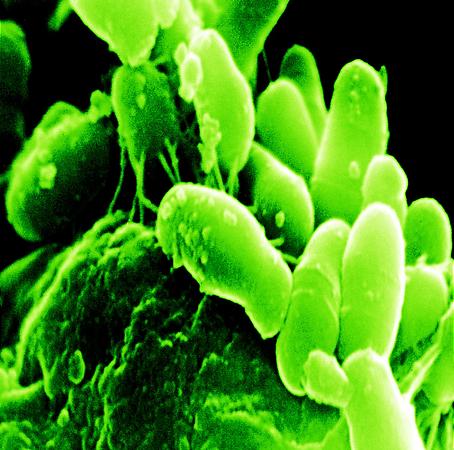
Actinobacteria are a group of Gram-positive bacteria with high guanine and cytosine content. They can be terrestrial or aquatic. Actinobacteria is one of the dominant phyla of the bacteria. Analysis of glutamine synthetase sequence has been suggested for phylogenetic analysis of Actinobacteria.
Characteristics
Actinobacteria include some of the most common soil life, freshwater life, and marine life, playing an important role in decomposition of organic materials, such as cellulose and chitin, and thereby playing a vital part in organic matter turnover and carbon cycle. This replenishes the supply of nutrients in the soil and is an important part of humus formation.
Actinobacteria are well known as secondary metabolite producers and hence of high pharmacological and commercial interest. In 1940 Selman Waksman discovered that the soil bacteria he was studying made actinomycin, a discovery for which he received a Nobel Prize. Since then, hundreds of naturally occurring antibiotics have been discovered in these terrestrial microorganisms, especially from the genus Streptomyces.
Most Actinobacteria of medical or economic significance are in subclass Actinobacteridae, order Actinomycetales. While many of these cause disease in humans, Streptomyces is notable as a source of antibiotics.
Of those Actinobacteria not in Actinomycetales, Gardnerella is one of the most researched. Classification of Gardnerella is controversial, and MeSH catalogues it as both a gram-positive and gram-negative organism.
More about: Actinobacteria sale
Read more: Lactobacillus bacteria

Monday, March 19, 2012

What is lactobacillus?

Lactobacillus produce lactic acid and are used for many different things, including yogurt production and the maintenance of healthy intestinal microflora. Lactobacilli are commonly associated with the gastrointestinal tract of humans. The genome of the Lactobacillus plantarum has been sequenced and the genomes of several other Lactobacilli are underway. The goal of researchers is to better understand the roles, capabilities, and interactions of Lactobacilli.
Lactobacilli are rod-shaped, Gram-positive, fermentative, organotrophs. They are usually straight, although they can form spiral or coccobacillary forms under certain conditions. They are often found in pairs or chains of varying length. Lactobacilli are classified as lactic acid bacteria, and derive almost all of their energy from the conversion of glucose to lactate during homolactic fermentation. In this process 85-90% of the sugar utilized is converted to lactic acid. They generate ATP by nonoxidative substrate-level phosphorylation.
Lactobacilli are commonly associated with plant herbage. They have a generation time ranging from 25 minutes to several hundred minutes, and grow optimally between the temperatures of 30 and 40 degrees Celsius, although thermophilic strains can be comfortable at temperatures as high as 60 degrees Celsius. They are also commonly associated with the gastrointestinal tract of animals and humans. As natural GI microflora they are believed to perform several beneficial roles including immunomodulation, interference with enteric pathogens, and maintenance of healthy intestinal microflora. Lactobacillus gasseri appears to be the main species of lactobacilli that inhabits the human gastrointestinal tract.
Lactobacilli, specifically Lactobacillus acidophilus, are considered to have probiotic uses. Research on these claims is controversial and inconclusive. Many people take L. acidophilus to help maintain the pH level of the intestine, through the production of lactic acid, that allows for the proliferation of sensitive yet beneficial microbes that are important parts of the fecal flora, and in doing so can help in replacing useful bacteria in the intestinal tract after heavy antibiotic usage. L. acidophilus also has uses in combating irritable bowel syndrome, hepatic encephalopathy, asthma, high cholesterol, lactose intolerance, and necrotizing enterocolitis. L. acidophilus is also used as a feed additive for livestock, because it supposedly helps the digestibility of food through the production of certain enzymes. New research is delving into the possible use of Lactobacillus acidophilus in combating E. coli colonization of livestock and proliferation of infected meat. University of Nebraska research has shown, in the largest feeding study ever conducted, that calves fed with feed supplemented with L. acidophilus had up to 80% less E. coli in their manure. This is the most promising method in inhibiting E. coli in livestock to date, but further studies need to be done be for it can be implemented on a global scale.
More about: lactobacillus sale
Read more: Lactobacillus bacteria

Sunday, March 18, 2012

Uses of Nocardia in Clinical disease and microbiological diagnosis

Nocardia is a brand of abominably staining Gram-positive, catalase-positive, rod-shaped bacteria. It forms partially acid-fast beaded aberration filaments (acting as fungi, but getting absolutely bacteria). It has a absolute of 85 species. Some breed are non-pathogenic while others are amenable for nocardiosis. Nocardia are begin common in clay that is affluent with amoebic matter. In addition, Nocardia are articulate microflora begin in advantageous gingiva as able-bodied as periodontal pockets. Most Nocardia infections are acquired by assimilation of the bacilli or through alarming introduction.
Clinical disease and microbiological diagnosis
Nocardia asteroides is the species of Nocardia most frequently infecting humans, and most cases occur as an opportunistic infection in immunocompromised patients. Other species of medical interest are N. brasiliensis and N. caviae. Because it is acid-fast to some degree, it stains only weakly gram positive.
The most common form of human nocardial disease is a slowly progressive pneumonia, whose common symptoms include cough, dyspnea (shortness of breath), and fever. It is not uncommon for this infection to spread to the pleura or chest wall. Pre-existing pulmonary disease, especially pulmonary alveolar proteinosis, increases the risk of contracting a Nocardia pneumonia. Every organ can be affected if a systemic spread takes place.
Nocardia spp are deeply involved in the process of endocarditis as one of its main pathogenic effects.
In about 25-33% of people Nocardia infection will take the form of encephalitis and/or brain abscess formation.
Nocardia may also cause a variety of cutaneous infections such as actinomycetoma (especially Nocardia brasiliensis), lymphocutaneous disease, cellulitis and subcutaneous abscesses.
More about: Nocardia sale
Read more: Lactobacillus bacteria

Thursday, March 15, 2012

Paenibacillus VS. Paenibacillus vortex

Paenibacillus' is a genus of Gram-positive, facultative anaerobic, endospore-forming bacteria, originally included within the genus Bacillus and then reclassified as a separate genus in 1993. Bacteria belonging to this genus have been detected in a variety of environments such as: soil, water, rhizosphere, vegetable matter, forage and insect larvae, as well as clinical samples. The name reflects this fact: Latin paene means almost, and so the Paenibacilli are literally almost Bacilli. The genus includes P. larvae, which is known to cause American foulbrood in honeybees, the P. polymyxa, which is capable of fixing nitrogen and therefore is used in agriculture and horticulture, the Paenibacillus sp. JDR-2 which is known to be a rich source of chemical agents for biotechnology applications and pattern forming strains such as P. vortex and P. dendritiformis discovered in the early 90s, which are known to develop complex colonies with intricate architectures as is illustrated in the pictures.
Paenibacillus vortex is a species of pattern-forming bacteria, first discovered in the early 90's by Ben-Jacob's group. It is a social microorganism that forms colonies with complex and dynamic architectures. The genus Paenibacillus comprises Gram-positive, facultative anaerobic, endospore-forming bacteria originally included within the genus Bacillus and then reclassified as a separate genus in 1993. Bacteria belonging to this genus have been detected in a variety of environments such as: soil, water, rhizosphere, vegetable matter, forage and insect larvae, as well as clinical samples. It is mainly found in heterogeneous and complex environments, such as soil and rhizosphere.
More about: Paenibacillus sale
Read more: Food bacteria

Wednesday, March 14, 2012

Effects of Bifidobacterium Brevis

Effect of Bifidobacterium Brevis
Bifidobacterium Brevis is Acid-resistant, very sensitive to antibiotics and mostly distributed in the colon, Bifidobacterium Brevis can inhibit the growth of harmful bacteria in intestines and help digestion, Bifidobacterium Brevis can decomposition up to more than 20 kinds of carbohydrates, and Bifidobacterium Brevis produce natural antibiotics and lactic acid. Bifidobacterium Brevis is one of the most common probiotics in health food
Usage: 
Additive to beverage (yogurt, sports drinks, fruit juice..) as functional Formula; Additive to infant food, and also health food.
Principle
Bifidobacterium Brevis can improve children's acute diarrhea and antibiotic cause of diarrhea, increase the white defensive capabilities.
Bifidobacterium Brevis can absorb intestinal mucous membrane glycoprotein and ileum glycoprotein, colonization in intestinal, improve the damaged bowel sticky Membrane, balance the intestinal flora, inhibit the growth of bacteria and restrain bowel mucosa E.c oli various physical adsorption, etc.
More about: Bifidobacterium Brevis sale
Read more: Lactobacillus bacteria

Tuesday, March 13, 2012

What is the characteristics of Pseudomonas?

Pseudomonas is a brand of gammaproteobacteria, acceptance to the ancestors Pseudomonadaceae absolute 191 validly declared species.
Pseudomonas aeruginosa is more accustomed as an arising adept antibody of analytic relevance. Several altered epidemiological studies announce antibacterial attrition is accretion in analytic isolates.
The associates of the brand authenticate a abundant accord of metabolic diversity, and appropriately are able to colonise a advanced ambit of niches. Their affluence of ability in vitro and availability of an accretion amount of Pseudomonas ache genome sequences has fabricated the brand an accomplished focus for accurate research; the best advised breed cover P. aeruginosa in its role as an adept animal pathogen, the bulb antibody P. syringae, the clay bacillus P. putida, and the bulb advance announcement P. fluorescens.
Because of their boundless accident in baptize and in bulb seeds such as dicots, the pseudomonads were empiric aboriginal in the history of microbiology. The all-encompassing name Pseudomonas created for these bacilli was authentic in rather ambiguous agreement by Walter Migula in 1894 and 1900 as a brand of Gram-negative, rod-shaped and polar-flagella bacilli with some sporulating species, the closing account was after accepted incorrect and was due to refractive granules of assets materials. Despite the ambiguous description, the blazon species, Pseudomonas pyocyanea (basonym of Pseudomonas aeruginosa), accepted the best descriptor.
Characteristics of Pseudomonas
Members of the genus display the following defining characteristics:
Rod shaped
Gram-negative
One or more polar flagella, providing motility
Aerobic
Non–spore forming
positive catalase test
positive oxidase test.
Other characteristics which tend to be associated with Pseudomonas species (with some exceptions) include secretion of pyoverdine, a fluorescent yellow-green siderophore under iron-limiting conditions. Certain Pseudomonas species may also produce additional types of siderophore, such as pyocyanin by Pseudomonas aeruginosa and thioquinolobactin by Pseudomonas fluorescens,. Pseudomonas species also typically give a positive result to the oxidase test, the absence of gas formation from glucose, glucose is oxidised in oxidation/fermentation test using Hugh and Leifson O/F test, beta hemolytic (on blood agar), indole negative, methyl red negative, Voges–Proskauer test negative, and citrate positive.
Use
As biocontrol agents
Since the mid 1980s, certain members of the Pseudomonas genus have been applied to cereal seeds or applied directly to soils as a way of preventing the growth or establishment of crop pathogens. This practice is generically referred to as biocontrol. The biocontrol properties of P. fluorescens strains (CHA0 or Pf-5 for example) are currently best understood, although it is not clear exactly how the plant growth-promoting properties of P. fluorescens are achieved. Theories include: that the bacteria might induce systemic resistance in the host plant, so it can better resist attack by a true pathogen; the bacteria might out compete other (pathogenic) soil microbes, e.g. by siderophores giving a competitive advantage at scavenging for iron; the bacteria might produce compounds antagonistic to other soil microbes, such as phenazine-type antibiotics or hydrogen cyanide. There is experimental evidence to support all of these theories.
Other notable Pseudomonas species with biocontrol properties include P. chlororaphis, which produces a phenazine-type antibiotic active agent against certain fungal plant pathogens, and the closely related species P. aurantiaca which produces di-2,4-diacetylfluoroglucylmethane, a compound antibiotically active against Gram-positive organisms.
As bioremediation agents
Some members of the genus Pseudomonas are able to metabolise chemical pollutants in the environment, and as a result can be used for bioremediation. Notable species demonstrated as suitable for use as bioremediation agents include:
P. alcaligenes, which can degrade polycyclic aromatic hydrocarbons.
P. mendocina, which is able to degrade toluene.
P. pseudoalcaligenes is able to use cyanide as a nitrogen source.
P. resinovorans can degrade carbazole.
P. veronii has been shown to degrade a variety of simple aromatic organic compounds.
P. putida has the ability to degrade organic solvents such as toluene. At least one strain of this bacterium is able to convert morphine in aqueous solution into the stronger and somewhat expensive to manufacture drug hydromorphone (Dilaudid).
Strain KC of P. stutzeri is able to degrade carbon tetrachloride.
Food spoilage agents
As a result of their metabolic diversity, ability to grow at low temperatures and ubiquitous nature, many Pseudomonas spp. can cause food spoilage. Notable examples include dairy spoilage by P. fragi, mustiness in eggs caused by P. taetrolens and P. mudicolens, and P. lundensis, which causes spoilage of milk, cheese, meat, and fish.
More about: Pseudomonas sale
Read more: Food bacteria

Monday, March 12, 2012

What is Raw material supply short lactobacillus colon?

Raw material supply short lactobacillus colon is abbreviated cl.perfringen lactobacillus gram-positive bacterium, the optimum advance temperature is 37 degrees Celsius, complete anaerobic, do not accept top mobility, is the better bairn abdominal flora. Lactobacillus is a blazon of bacteria. There are lots of altered breed of lactobacillus.
These are "friendly" bacilli that commonly reside in our digestive, urinary, and animal systems after causing disease. Lactobacillus is aswell in some brewed foods like yogurt and in comestible supplements.
Some humans use lactobacillus for accepted assimilation problems; annoyed bowel affection (IBS); colic in babies; Crohn's disease; deepening of the colon; and a austere gut botheration alleged necrotizing enterocolitis (NEC) in babies built-in prematurely. Raw material supply short lactobacillus colon is of antibacterial aggressive to acid, sensitive, mostly broadcast in the colon, can arrest the advance of adverse bacilli and the civil to advice digestion, atomization of carbohydrates as abounding as 20 and accustomed antibacterial and lactic acid,
There are apropos about the superior of some lactobacillus products. Close to merchandises arresting to accommodate Lactobacillus acidophilus in fact accommodate no lactobacillus acidophilus, or they accommodate a altered ache of lactobacillus such as Lactobacillus bulgaricus. Some articles are attenuated with “unfriendly” bacteria.
Principle and effect:
1) for short cl.perfringen lactobacillus gram-positive bacterium, the optimum growth temperature is 37 degrees Celsius, absolute anaerobic, do not have high mobility, is the largest newborn intestinal flora.
2) of antibiotic resistant to acid, sensitive, mostly distributed in the colon, can inhibit the growth of harmful bacteria and the intestine to help digestion, decomposition of carbohydrates as many as 20 and natural antibiotic and lactic acid,
More about: Raw material supply short lactobacillus colon sale
Read more: Lactobacillus bacteria